Gascon Guards cadets
Cyrano de BergeracThe Gascon Guards cadets are a company presented as a boisterous collective in Paris and later shown enduring hunger and entrapment at the Siege of Arras. Their movement from a noisy entrance to a dawn camp of sleeping, pale, thin soldiers gives their military identity a material cost: courage persists, but it does not feed or protect them from the conditions of the siege.
Identity and Public Presentation
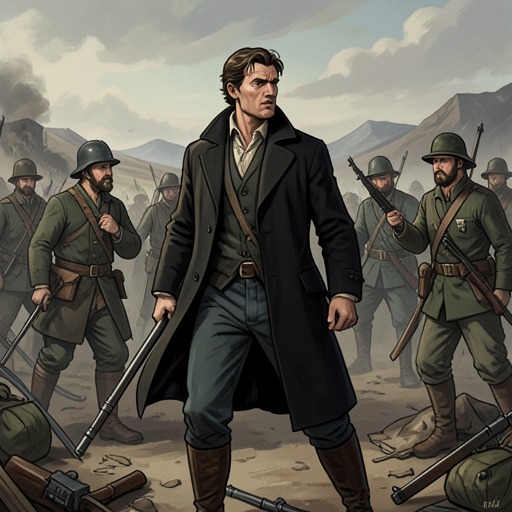
The cadets first register as a group rather than as individually distinguished characters. When they enter, their shouted exclamations—“Mille dious! Capdedious! Pocapdedious!”—make their arrival a burst of collective sound. The scene gives them an unmistakable public presence, though the supplied evidence does not identify individual members of the company.
Their company is also introduced through a formal gesture. With the assembled group present, Cyrano steps toward De Guiche and begins to present the cadets to him. The moment places the company before a figure of authority, but its staging emphasizes Cyrano as the intermediary who brings them into view; the cadets appear together as the body being presented.
The Company at the Siege of Arras
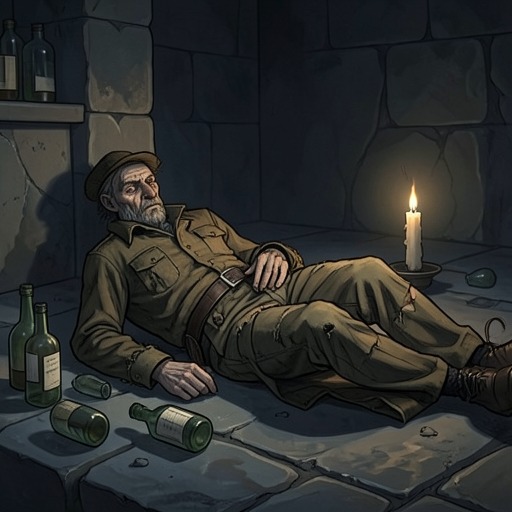
At daybreak in the camp, the cadets are wrapped in their mantles and sleeping among the tents and scattered arms. Carbon de Castel-Jaloux and Le Bret keep watch while the soldiers rest; both watchers are described as very pale and thin. The tableau makes exhaustion visible across the camp, not just a matter of reported hardship. The cadets’ mantles serve as their covering as they sleep amid the equipment of a military encampment.
The company’s predicament is more complicated than simply besieging an enemy. Carbon protests, “It is disgraceful that we should starve while we're besieging!” Le Bret names the reversal directly: while the French are conducting a siege, the Cardinal Infante of Spain has trapped and besieged them. Their position is therefore one of encirclement as well as attack, and the complaint about starvation exposes the weakness behind the language of military initiative.
Hunger, Supply, and Defense
The supply situation is precarious. De Guiche reports that the Marshal made a secret attempt the previous evening to bring provisions to the camp, taking a substantial force with him. He then warns that half the army is absent. The news connects the cadets’ immediate hunger to a wider operational vulnerability: the effort to supply the besieged force has drawn troops away, leaving the camp short of both food and manpower.
Roxane gives the privation a concrete scale when she says that the camp air is keen and that she herself is famished, then asks for pasties, cold fricassee, and old wines to be brought. Her request puts food into the scene as something specific and urgently desired, against the cadets’ earlier complaint that they are starving. The contrast is sharp: the siege is measured not only in opposing forces and military plans, but also in whether provisions can reach those enduring it.
De Guiche identifies a remaining means of defense when he says that he has one cannon left and has had it carried to a corner for the men to use if necessary. The weapon is a limited resource, not a promise of rescue or victory. In the same camp where food is scarce and half the army is away, even a single cannon carries the immediate weight of preparedness.
Collective Role and Significance
The cadets’ scenes set martial identity against physical need. Their noisy entrance establishes a forceful collective presence; at Arras, their mantles, hunger, and exposure to encirclement show what that presence must withstand. The evidence does not supply an individual biography for the company or establish its eventual fate, so their significance lies in this recurring group portrayal: they are soldiers whose courage belongs to a body also subject to exhaustion, missing provisions, and the hazards of a besieged camp.